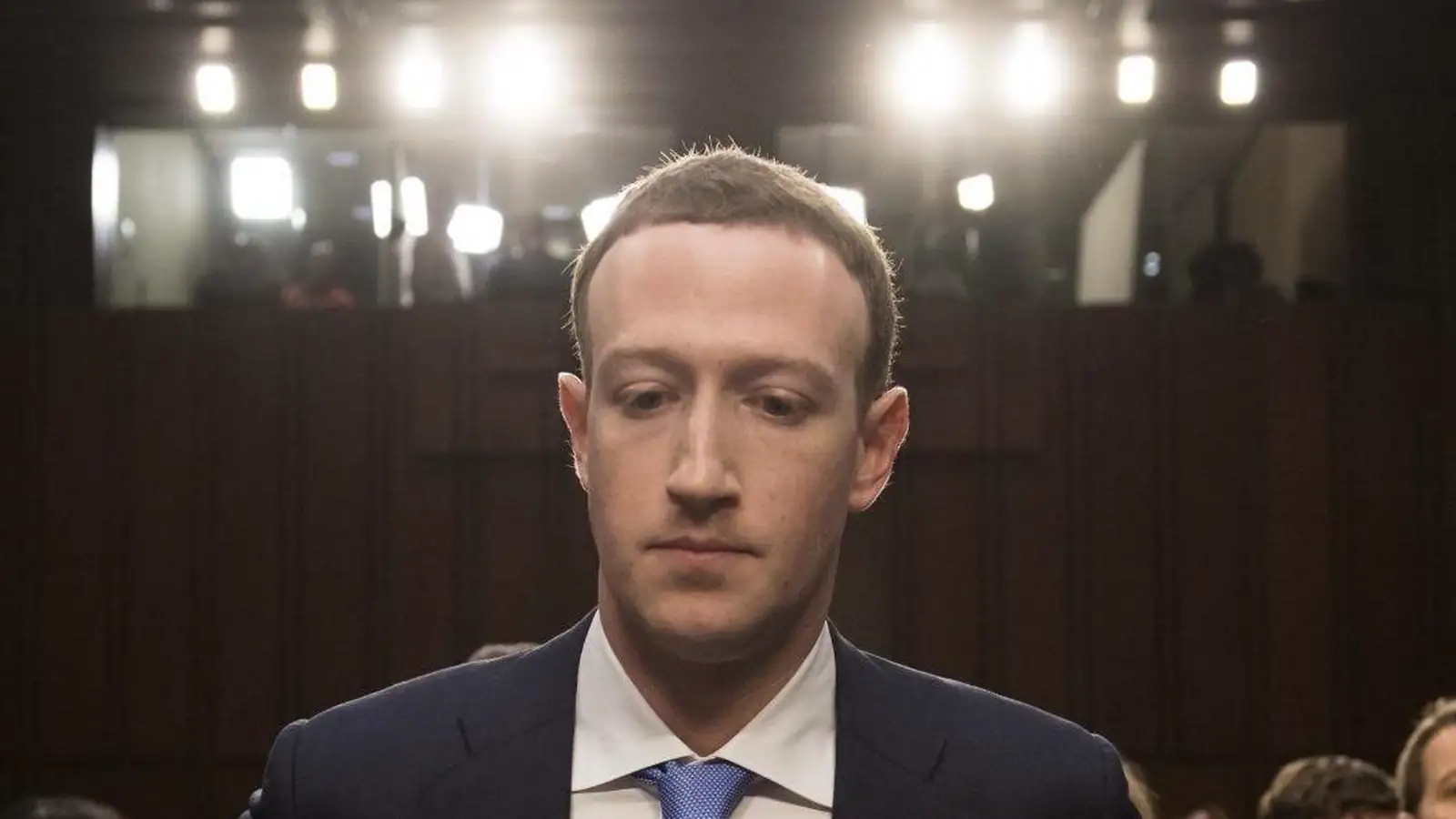
Header photo: Mark Zuckerberg at the U.S. Senate hearing, April 10, 2018. Image via Iamskamal Blog on YouTube; original photographer unconfirmed. Used for news commentary and reporting; all rights belong to the original photographer and rights holder. If this is your image and you would like it credited differently or removed, contact us and we will act promptly.
Meta has agreed to pay up to $16.68 billion to settle a lawsuit from 29 U.S. states alleging that Instagram and Facebook were designed to addict children, and to rebuild how teenagers use both apps for the next ten years. The headline is the money. The precedent is the design: for the first time, specific product features have been treated as legal liabilities and negotiated away line by line.
The deal in numbers
The settlement was announced on August 26, 2026, eight days into a federal trial in Oakland, and approved by U.S. District Judge Yvonne Gonzalez Rogers.
- $16.68 billion: the coalition's maximum, according to Reuters via Al Jazeera. Meta puts the whole national package at about $18 billion, including a separate deal with Texas worth more than $1 billion.
- 10 years: the payment schedule, and also how long the design rules last.
- $5.3 billion (about 30%) is released only if YouTube and TikTok adopt the same protections and pay a matching amount, per the AP.
- $1.4 trillion: the penalty exposure Meta's own filing described before it settled. The states had sought about $200 billion.
- 52 state and territorial attorneys general signed on to the framework.
Meta admitted no wrongdoing. But the pressure in the courtroom was building. Instagram head Adam Mosseri had already testified, Mark Zuckerberg was expected next, and former engineering director Arturo Béjar told the court that the company put profit ahead of safety. In New Mexico, Meta had already been ordered to pay $375 million in March and another $567 million in August.
What actually changes
The terms read like a product spec. Teen accounts get a two-hour default daily limit across both apps, which only a parent can remove, with alerts at 60 and 90 minutes. Night Mode locks the apps from midnight to 6 a.m. School Mode mutes notifications from 8 a.m. to 3 p.m. Like counts are hidden by default. Extreme makeup filters are blocked. Teens can choose a feed that doesn't run on the recommendation algorithm, and an independent auditor checks the work, as TechCrunch details. California Attorney General Rob Bonta said the limit drops to one hour if other platforms agree to the same terms.
Why every platform should read this
Each item on that list is something the industry used to call engagement: infinite sessions, late-night pings, public popularity scores, and feeds tuned to keep people scrolling. The settlement turns each one into a cost.
That conditional $5.3 billion is the clever part. It pays Meta's rivals to adopt the same standard. Meta's Chief Legal Officer, C.J. Mahoney, put it plainly: "Because teens move fluidly across dozens of apps, we need an industry-wide solution." The standard is meant to spread.
The audience is big enough to make that likely. Pew Research Center found that 97% of U.S. teens go online every day, and 36% use at least one major social platform "almost constantly."
Virtual worlds are next in line
Nothing in the settlement names virtual worlds, but the same mechanics live there too: avatars with follower counts, social spaces that never close, reward loops and anonymous strangers. Platforms that host young people in 3D should assume the same questions are coming, and answer them in the architecture rather than in court.
For builders and owners of digital spaces on Nexaria, the practical checklist is short:
- Default limits a parent controls, not ones buried in settings.
- Quiet hours for school and sleep.
- No public popularity counts for minors.
- A non-algorithmic mode, so attention is a choice.
- Real age assurance, the same principle behind verifiable ownership: you have to know who is on the other side.
- An audit trail, because "we built protections" now has to be proven. Records you can trust are the theme of who owns the learning record.
The bottom line
Protections that are designed in from the start cost a fraction of protections imposed by a court. For a builder's view of what this means for family and community apps, read the companion piece in the Smith App Studio Journal.