Smart Locks and NFT-Gated Access to Real Spaces
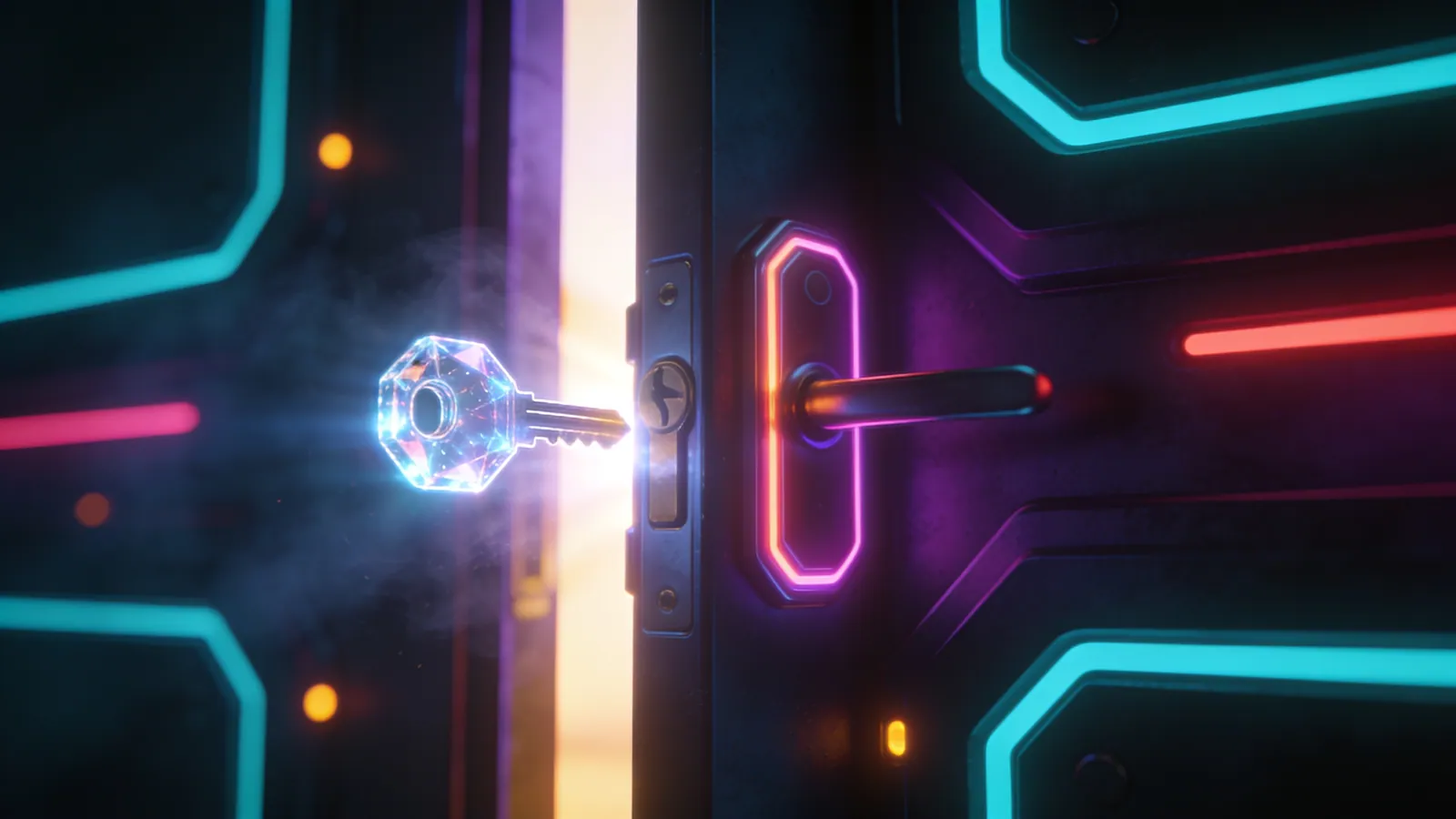
For most of history, a key was a piece of metal and a door was either open to you or it was not. Smart locks changed the mechanism; Web3 changes the permission behind it. When a lock can check who holds a specific token before it opens, an NFT stops being a picture and becomes a credential — a portable, verifiable right to enter a real place. That convergence is where connected hardware and digital ownership meet, and it is one of the ideas Nexaria explores through its IoT layer at nexariadigital.com.
How NFT-gated access actually works
The concept is simpler than it sounds. A smart lock is asked one question: does the person at the door control the asset that grants entry?
- A visitor presents a wallet, usually by tapping a phone or scanning a code at the door.
- The lock — or a small controller beside it — checks whether that wallet holds the required token.
- If ownership checks out, a
smart_lockevent is recorded and the door releases. - If not, nothing happens, and no key ever changed hands.
Because the token lives in the owner's wallet rather than a company database, access can be transferred, rented, or revoked without cutting new keys or reprogramming panels.
Why this matters for asset owners
Tying entry to ownership turns a static space into a programmable one. A studio, a co-working suite, a members' lounge, or a short-term rental can all grant access through the same underlying pattern.
- Rentals become effortless — lease a space for a weekend by transferring a time-bound token.
- Membership is provable — holding the right asset is the badge, verified at the door.
- History is transparent — every entry leaves an auditable record instead of a lost logbook.
- Access is composable — the same token can unlock a door and a matching virtual space.
To be clear about what exists today: on Nexaria these hardware paths are integration-ready, not live wiring to any specific lock. The platform models the events and permissions; the physical bridge is built per deployment.
The rails underneath
Fast, low-cost settlement makes this practical. When a token can move for a fraction of a cent, granting a single evening's access is realistic rather than wasteful. Open ecosystems such as xSPECTAR, built on the XRPL, show how transparent ownership can drive real utility instead of speculation — exactly the foundation that credential-style access needs.
You can see how these permissions are organized in the Nexaria IoT dashboard, where owners map assets to the spaces they unlock.
A grounded look ahead
NFT-gated access will not replace every keycard overnight, and it should not be sold as magic. What it offers is a cleaner link between owning something and being allowed somewhere. As connected locks become common, the door that checks your wallet — rather than your keyring — will feel less like novelty and more like the obvious way to prove you belong.