Galleries, Billboards, and Foot Traffic: Why Artists Chose Voxels
Ask where digital art actually gets shown — not listed, not traded, shown — and one answer keeps surfacing: Voxels. Somewhere between the parcel map filling in and the first crop of exhibition spaces going up, the world quietly became the art crowd's default venue. Whole neighbourhoods read like gallery districts. Openings happen. People turn up.
It did not get there through a marketing campaign. It got there through geometry and a URL.
Why galleries work here
A gallery is a solved problem in Voxels, and the solutions are unglamorous ones.
- Walls are free and vertical. A parcel's build volume is essentially unlimited wall surface, and hanging work costs nothing but arrangement.
- Media just works. Owners place images, video, audio, and glTF 3D models directly onto a build, as the Voxels site sets out.
- Provenance is visible. Displayed pieces can point back to the token behind them on Ethereum or a listing on OpenSea, so "is this the real one?" has an answer.
- Visiting costs nothing. No headset, no install — an opening invite is just a link, and the link works on a phone at a bus stop.
That last point is the one gallerists underrate. A physical opening is limited by who can travel; a Voxels opening is limited by who clicks. If you are planning one, our guide to building VR and AR event spaces covers the choreography.
Billboards people genuinely walk past
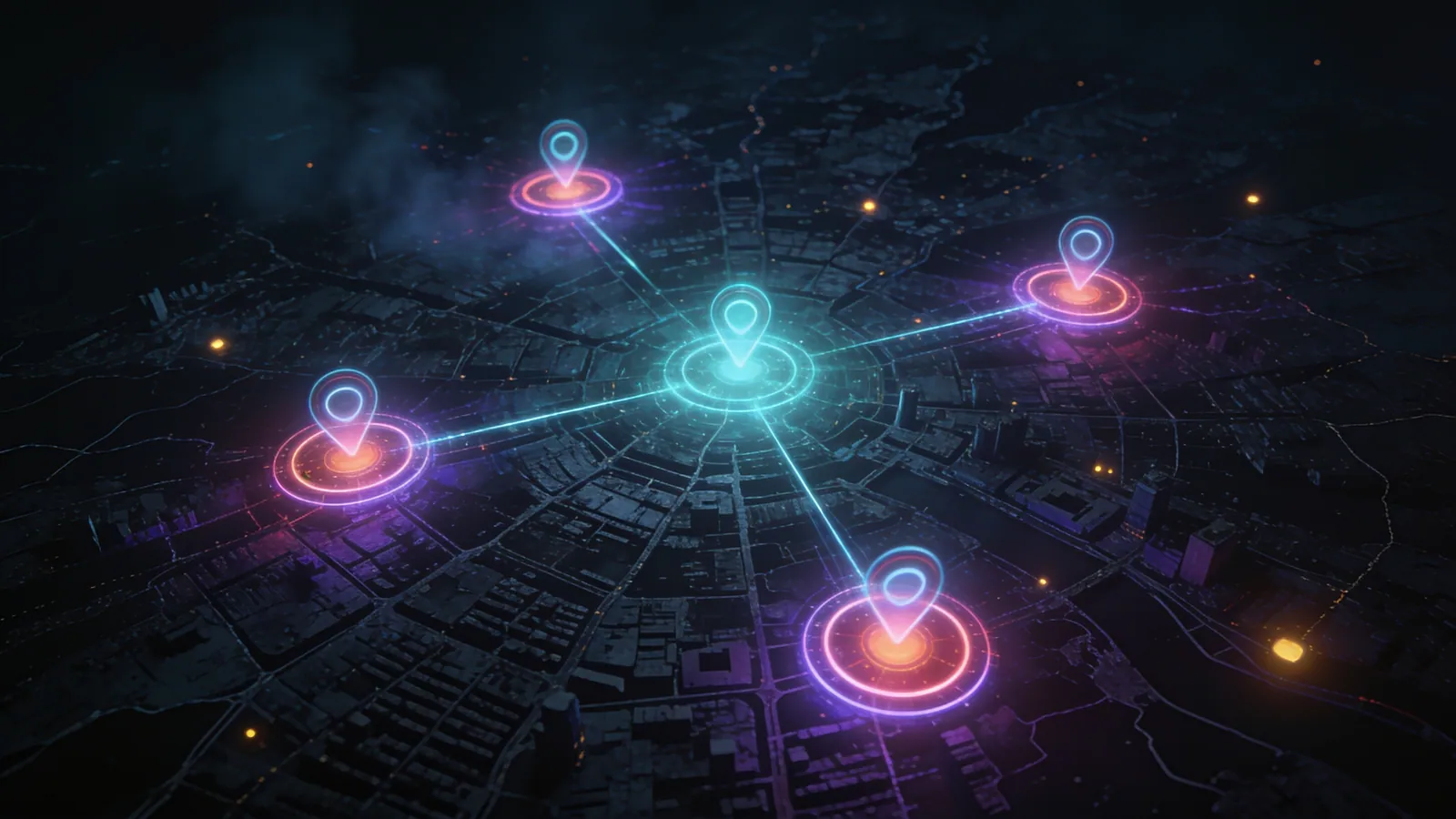
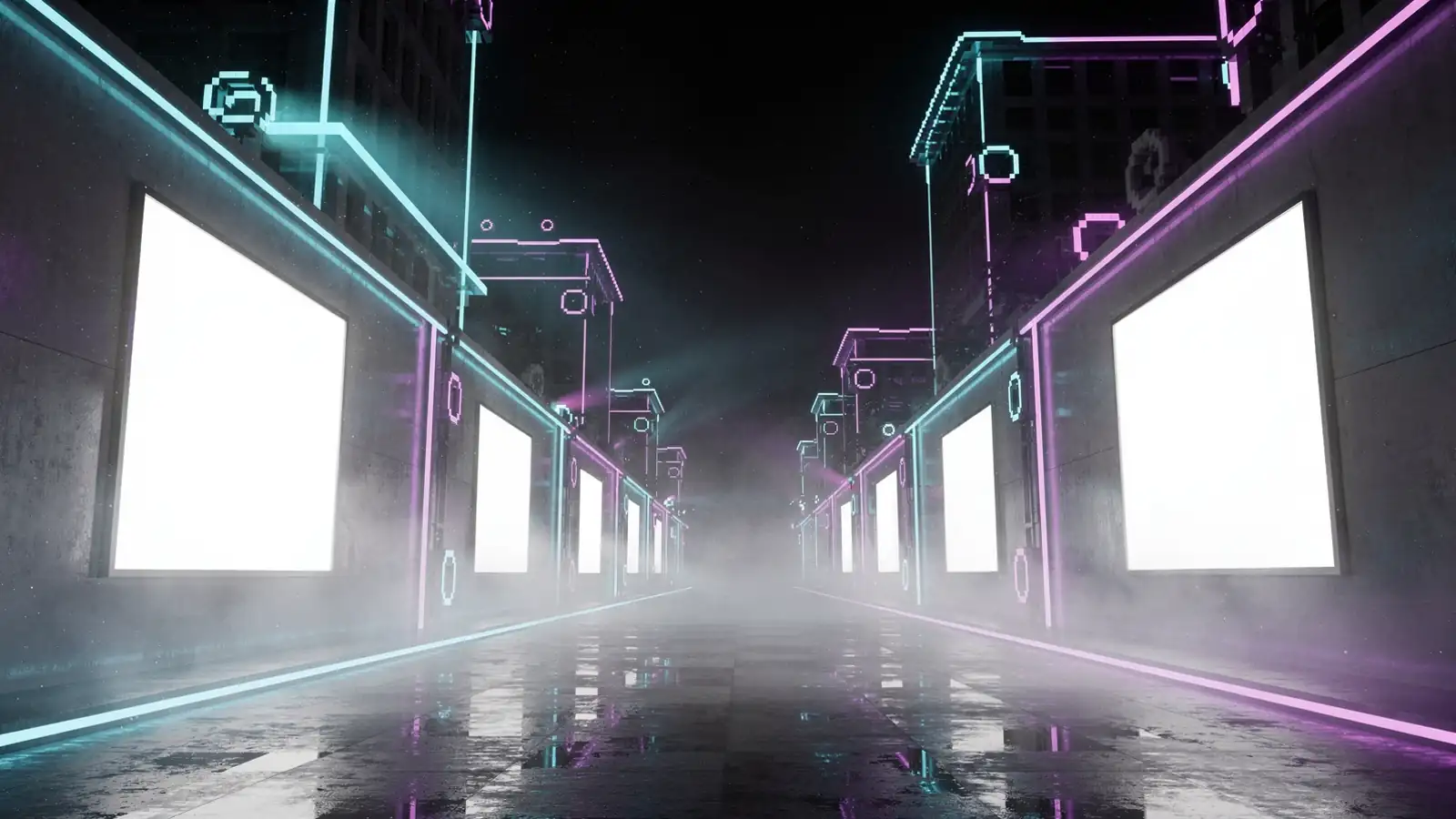
Here is where it gets commercially interesting. Because Voxels is laid out as a city — streets, corners, sightlines — an in-world billboard is not an interruption bolted onto a feed. It is a surface in a place, seen by someone who chose to walk down that street.
That makes the fundamentals of outdoor advertising apply almost unchanged. Placement beats volume. A well-sited board on a busy corner near a popular gallery outperforms a bigger one on a dead-end lane. Dwell time beats impressions, because a visitor lingering at an exhibition sees the surrounding city repeatedly.
It also means the honest, boring questions matter: how many avatars really came through, when, and for how long. Advertising that can be verified is worth more than advertising that can only be claimed — the argument we make in proof-of-play smart billboards and in our broader look at metaverse advertising.
Owners with well-positioned parcels have a real asset to rent. Advertisers get a placement that a human being physically approached. Both sides benefit from clear terms, which is the unsexy part nobody wants to build and everybody needs. Follow @voxels to watch how the world's districts keep evolving.
Where Nexaria Digital fits
Nexaria Digital is built for exactly this pairing. Creators get walkable 3D showrooms for exhibitions in browser and VR, plus photoreal 3D scans and Gaussian-splat captures when a physical piece needs to travel into a virtual room without losing its texture. Owners and brands get advertising placements through our advertise hub and leasing listings for renting out prime frontage. Verified-purchase reviews and Fan Passes on the marketplace turn a one-night opening into an ongoing relationship.
Artists chose Voxels because people show up. Everything else — the boards, the rents, the openings — follows from that.
This post is educational, not financial advice — always do your own research. Platform details come from public pages linked above and may evolve; corrections are welcome at our contact page.