
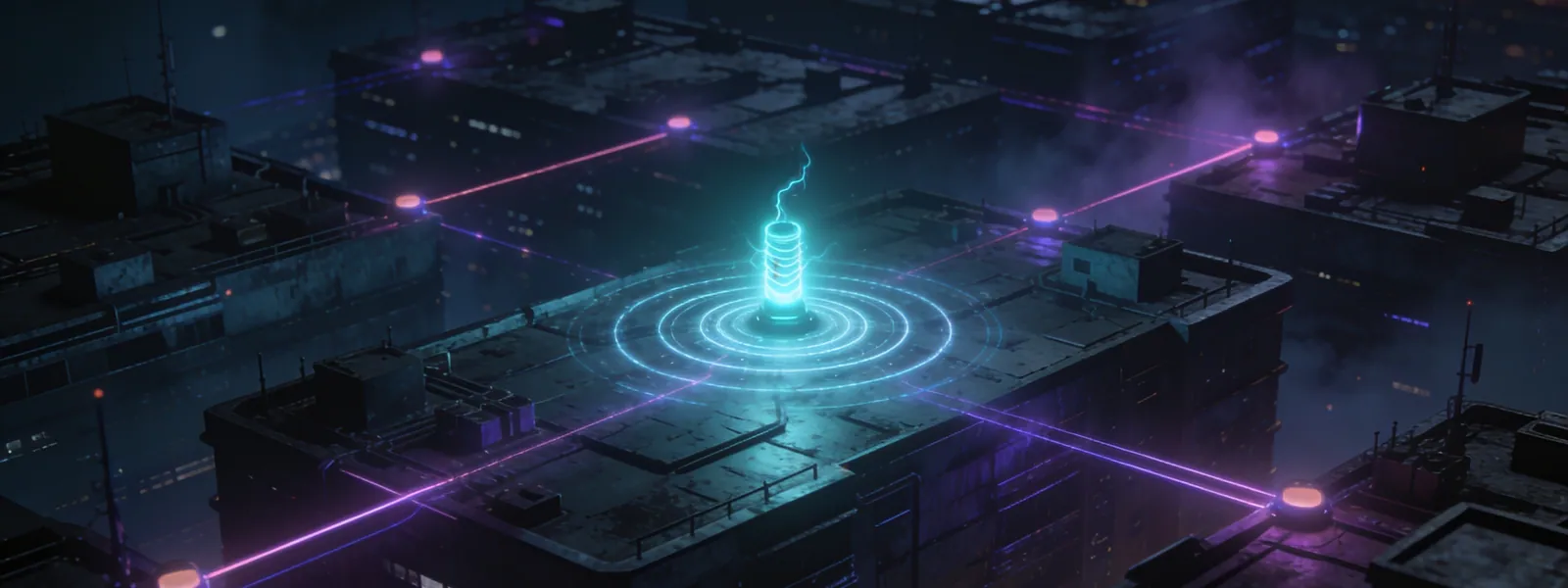
The Internet of Things, explained like a human
Your lock, your watch, your city's streetlights — quietly getting online. Here's what IoT actually is, why it's about to matter much more, and what it changes about owning things. No jargon, promise.
The idea
Ordinary objects, now on speaking terms with the internet
The Internet of Things — IoT — is a grand name for a simple idea: put a tiny computer and a connection inside ordinary objects, and suddenly they can sense, report, and act. A lock stops being a lump of metal and starts being something that knows who’s at the door. A poster stops being paper and starts being a doorway.
You already live with IoT, even if you never use the word. The doorbell that shows you the courier. The watch that nags you to stand up. The tracker that knows your package took a detour through the wrong city. Billions of these quiet little devices are already online — more of them than there are people — and the number climbs every year.
What’s changing now is not the gadgets. It’s what they’re connected to: artificial intelligence that can act on their signals, and digital ownership that can respond to them. That combination is why IoT is about to leave the “smart home gimmick” era and start quietly rewiring how cities, commerce, and ownership work.
Seen in the wild
Four small examples that explain everything
Each one is an ordinary object doing something objects never used to do.
A lock that knows you
Smart locks open for the right person without a metal key — and can even check who owns a digital pass before the door releases.
A poster that responds
Scan a code on a wall and something real happens: a reward, a collectible, a ticket. The poster just became interactive.
A room that counts
Small sensors quietly measure how many people visit a space and when — turning guesswork about foot traffic into honest numbers.
A screen that proves it
Digital billboards can log verifiable proof that an ad really played — so advertisers pay for what actually happened.
Closer to home
Where IoT touches your actual life
Your home
Thermostats that learn your schedule, leak sensors that text you before the ceiling stain appears, lights that follow your day.
Your health
Watches that catch heart irregularities, pill bottles that remind, sensors that let older relatives live independently longer.
Your city
Streetlights that dim when nobody's around, bins that call for pickup when full, parking that tells you where the empty spot is.
Your car
Vehicles that report their own maintenance needs, share hazard warnings with each other, and update overnight like a phone.
What's coming
The future implications — where this is heading
Three shifts worth understanding now, because they'll feel obvious in a few years.
Devices that decide
The next wave pairs sensors with AI: machines that don't just report a problem but negotiate the repair, reorder the part, and schedule the visit — with a human approving, not micromanaging.
Objects with digital twins
More physical things will carry a digital counterpart — a 'twin' that holds their history, warranty, and ownership. Sell the object and its whole verified story travels with it.
Ownership you can prove
When devices can check a blockchain, holding a digital asset can unlock real doors, real rentals, real experiences. Owning something online starts meaning something offline.
This is the world Nexaria is built for: a marketplace where physical signals and digital assets meet. Scans, sensors, and screens feed the platform’s IoT layer today — and every device event ties back to an asset someone actually owns.
FAQ
Questions people actually ask
What is the Internet of Things in simple terms?
IoT means ordinary objects — locks, lights, sensors, screens, cars — with a tiny computer and an internet connection inside. That lets them sense what's happening around them, report it, and act on it, instead of just sitting there.
What are everyday examples of IoT?
Smart doorbells and locks, fitness watches, thermostats that learn your schedule, package trackers, connected cars, digital billboards, and occupancy sensors in offices and shops. Most people already use IoT daily without calling it that.
Why does IoT matter for the future?
Because it connects the physical world to software. Combined with AI, devices move from reporting problems to solving them. Combined with blockchain, physical objects gain verifiable digital ownership — so a token in your wallet can open a real door or prove a product is genuine.
What is a digital twin?
A digital twin is a virtual copy of a real thing — a building, a machine, a parcel of land — kept in sync with it. The twin carries the object's live data and history, which makes it easier to manage, insure, rent, or sell the real thing.
Is IoT safe?
It depends on how it's built. Good IoT systems use per-device credentials, encrypted connections, and protection against replayed or forged messages — the approach Nexaria's device layer takes. Cheap devices with default passwords are where the horror stories come from.
How does Nexaria Digital use IoT?
Nexaria connects physical signals — QR and NFC scans, occupancy counts, proof-of-play from screens, smart-lock events — to digital assets on its marketplace. A scan of a real poster can interact with a digital campaign; a sensor can prove how busy a space really is.
Go deeper
Keep reading — the good stuff
Plain-English deep dives from the Nexaria blog.