A product photograph is marketing. A 3D model of the same product is closer to infrastructure — and most brands commissioning their first one have not noticed the difference.
The photograph answers one question, in one light, from one angle somebody chose. The model answers every angle, in whatever light it is placed into, as many times as it is reused. One is a picture of an asset. The other is the asset.
What the file actually contains
Not a spinning video and not a stack of images. A 3D asset is geometry — a surface described in space — carrying materials that say how that surface behaves: how rough the rubber is, how the leather creases, where the metal catches a highlight. Drop it into a room and it is lit by that room. Move it and the reflections move, because none of them were painted on.
The web's format for this is glTF, a royalty-free standard from the Khronos Group, frequently called the JPEG of 3D for the obvious reason: it is the neutral container everything agreed to read. That neutrality is the entire commercial point.
Where it comes from
Two honest routes, and the right one depends on what you sell.
- Photogrammetry. Photograph the object from every angle and let software reconstruct the surface. It captures the real item — the grain, the stitching, the scuff on the heel. Best for anything soft, worn or textured, where character is the product.
- CAD. If the item is engineered, exact geometry already exists in the manufacturing drawings. Building from them produces a flawless object with no wear at all — right for hardware and machined goods, wrong for a bag that should look lived in.
Either way the result is reduced so it loads on a phone, then given materials that respond to light.
One file, many rooms
This is where owning it pays. The same asset can stand on a plinth in a walkable storefront, spin in a viewer on an ordinary product page, appear in an augmented-reality view that puts the object on a customer's actual floor, populate a partner's virtual space, and illustrate a marketplace listing.
Build it once, place it anywhere — but only if you hold the source file and a licence that permits it. A model commissioned under a platform's terms, delivered only inside that platform, is a model that cannot move when the relationship ends. Catalogues learned this about photography a generation ago and are now being offered the same deal on a more expensive asset.
What it unlocks at the far end
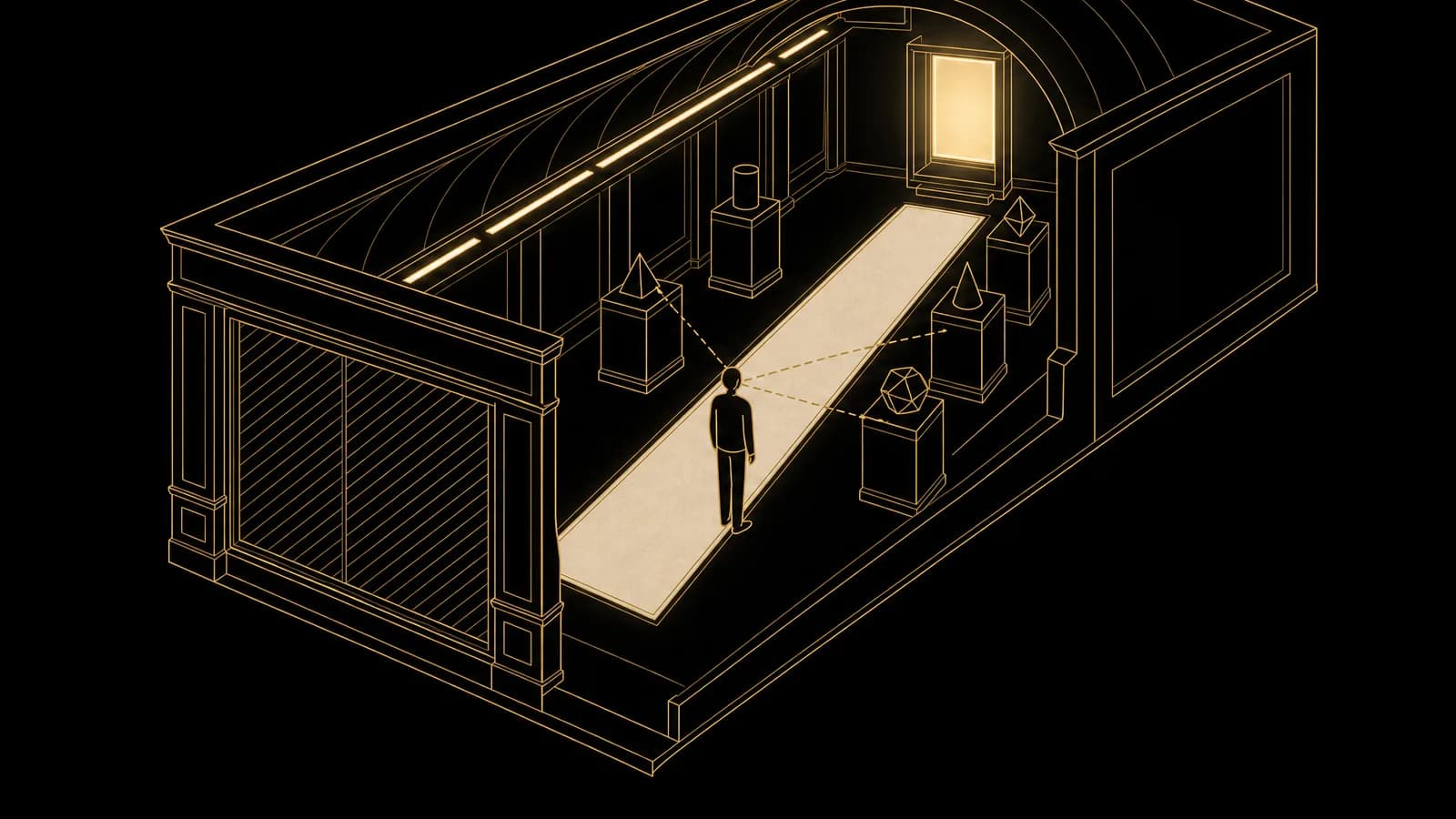
Once products are real objects, a shop can be a place rather than a grid. Smith App Studio has just opened Meridian Row, a lamplit boutique where every shoe stands on its own plinth — you walk around it, crouch to it, turn it over, and in a headset reach out and lift it off the stand. It opens from a plain link on the phone in your pocket, with nothing to install. Their companion piece, Your Products, Standing in a Room, covers the build side.
Worth being straight about the limits: a 3D asset is heavier to produce than a photograph, it needs upkeep when the product changes, and the catalogue-wide version of this is a real project, not a weekend. The argument is not that every SKU needs a model tomorrow. It is that the models you do commission are durable assets with a reuse life measured in years, and they should be treated — and contracted for — that way.
The question to ask first
Before the look, before the platform: when this is finished, what do we hold? The answer should be source files in an open format, with a licence that lets you place them anywhere, and no dependency on one vendor still being in business.
Everything else about immersive retail is downstream of that answer.