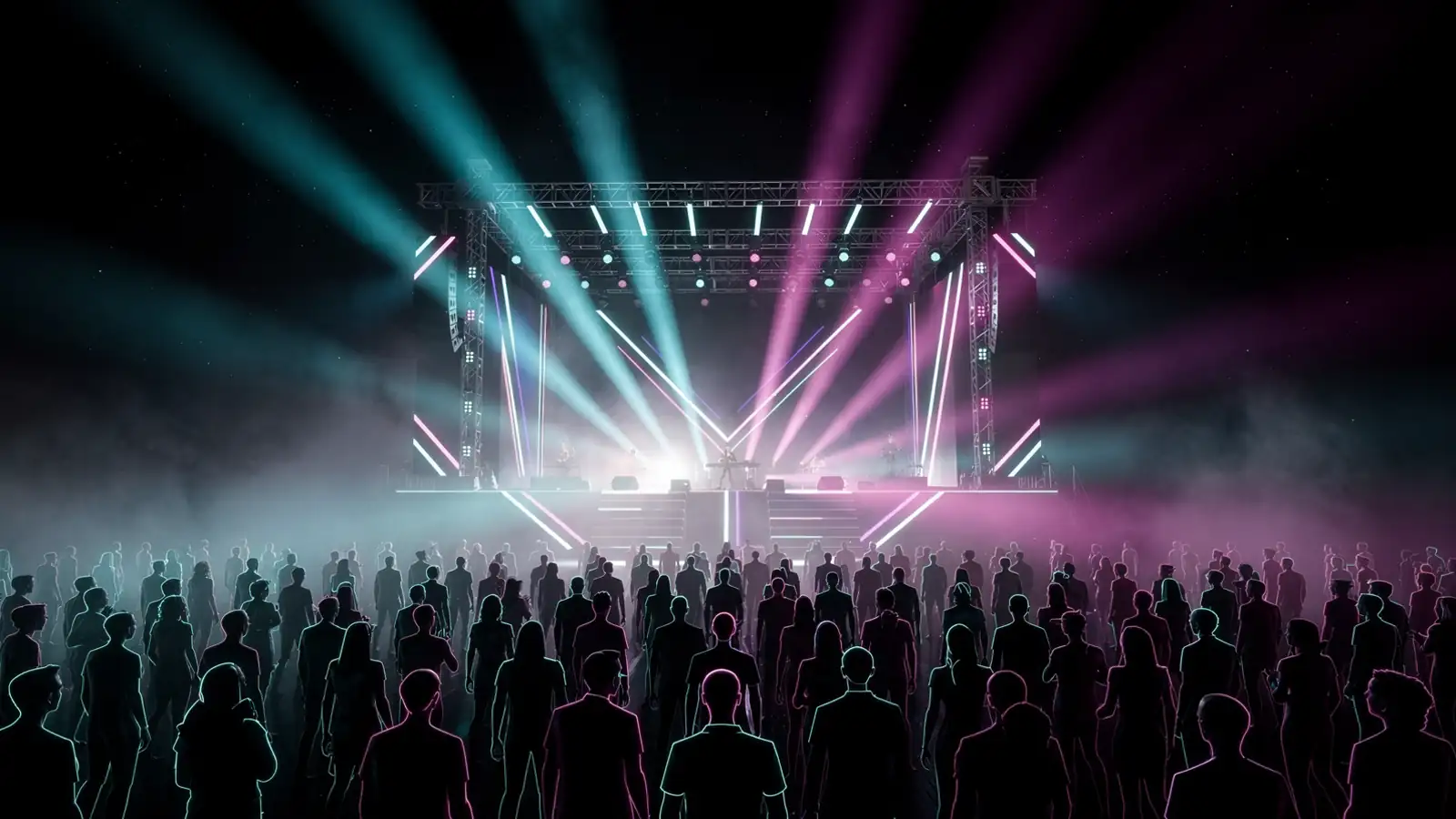
The short version: the browser learned a new trick, and it changes what "website" means. Thanks to WebXR — a W3C standard — one ordinary link can now serve a walkable 3D room to a phone, a laptop and a VR headset from the same code. Not a demo. Not an app download. A place. You can walk a live one right now.
The storefront flips from flat to walkable
For thirty years, a business's web presence has been pages: scroll, click, squint at thumbnails. The immersive web replaces the metaphor. A visitor steps into a showroom, approaches a product like an object, watches the film on an in-room screen, opens the brochure on a lectern, and checks out without leaving. Real estate proved the appetite years ago — 3D tours became table stakes for listings. Retail is next: Shopify's work on 3D commerce has long tied interactive product content to significantly higher conversion, because people buy what they can examine. And Meta Quest put the fully-immersive version of that experience into millions of living rooms, while Apple Vision Pro made the category a status object. The rails are laid; the trains are cheap.
It's not only commerce
The most human uses may be the least discussed:
- Memorials. A room that holds a life — photographs on walls, a voice still telling its stories, a place a scattered family can gather in from anywhere on earth.
- Legacies and accomplishments. An athlete's trophy hall, a physician's life of service, a school's championship history — walkable, shareable, permanent.
- Personalization. A returning client's private suite that knows their history, with a guide who greets them by name.
- Events without venues. Launches, galleries, conferences — capacity unlimited, geography irrelevant.
Why owners of digital property should care most
Here is the part our readers will see before most people do: a walkable space is what turns digital property into real property. An empty parcel earns nothing; a room people actually visit can be leased to a brand, carry advertising, host ticketed events, or be tokenized and traded — the same revenue stack we mapped in The Future of Digital Real Estate. The immersive web is the demand side of the digital-land equation. Spaces create traffic; traffic creates rent.
What a custom build looks like
Our sister studio, Smith App Studio, builds these spaces end to end — and their own showroom is the proof. The Grand Hall is a marble gallery with ten live apps framed on its walls, an AI guide generated from a reference sheet who walks beside you and speaks, touch controls on phones, WASD on desktop, and an Enter VR button when a headset is present. Every element is customizable to a client's brand: the architecture, the palette, the characters, the media on the walls, the checkout behind the buttons. The overview of both of their live worlds is at smithappstudio.com/vr — and the companion piece to this article lives on their journal: The Future of Digital Spaces.
The window
Every platform shift had a brief stretch when showing up early was itself the marketing. On the immersive web, that stretch is now: a walkable room still makes a first-time visitor say "wait — this is your website?" The first mover in each niche gets that reaction for free. Everyone after them is catching up.
Want to be the first mover — or the landlord who leases to one? Start with what is digital real estate, browse the marketplace, or go straight to the builders and start a conversation at Smith App Studio.
Educational content, not investment, legal or financial advice.