The Sandbox LAND: How a Voxel Grid Became a Game Platform
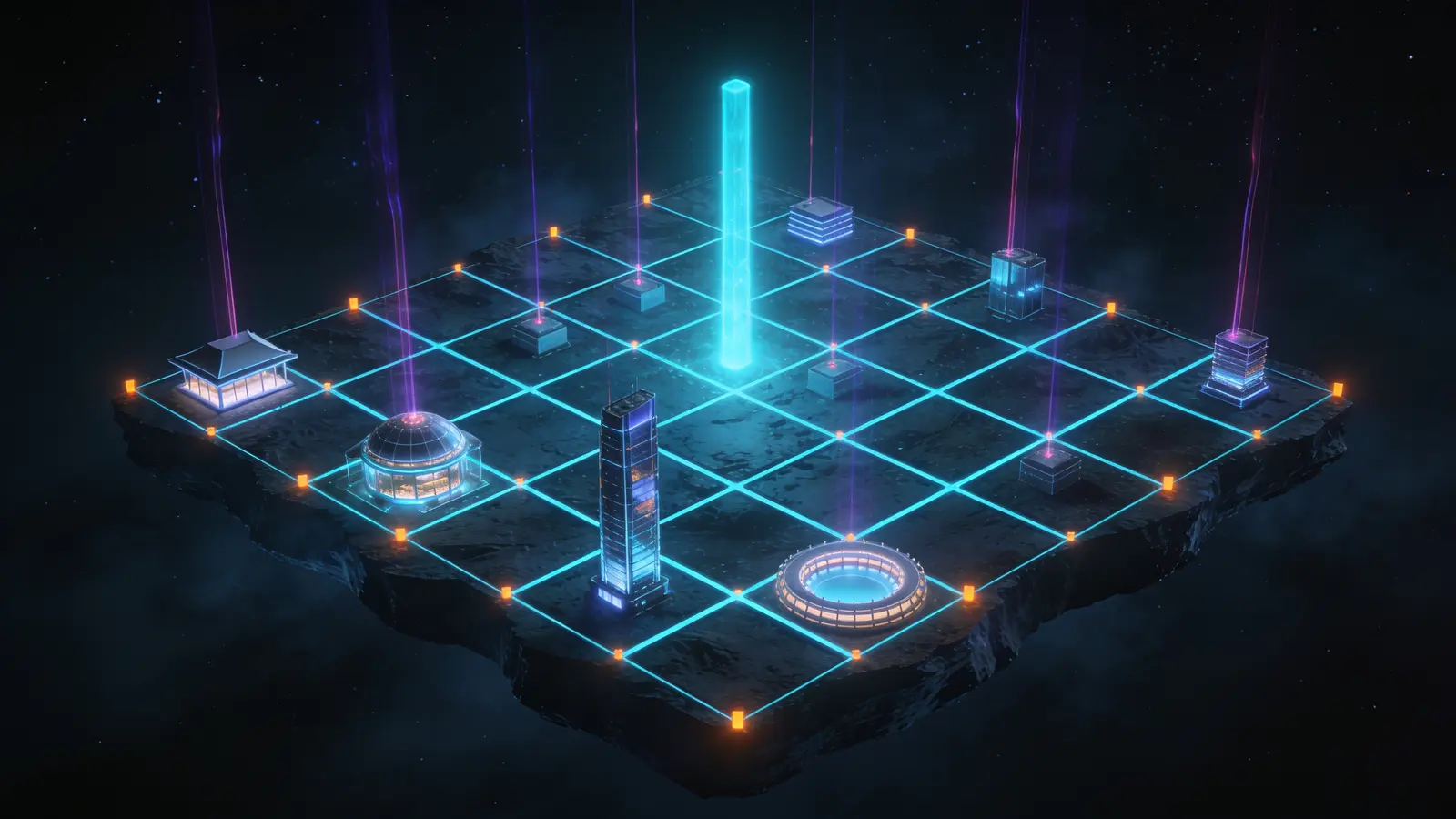
Most virtual worlds start with a story. The Sandbox started with a map — a finite grid of parcels, each one a token, each one owned by somebody, each one a place where a game could happen. That single decision is why LAND is worth understanding even if you never plan to buy one.
What a LAND actually is
A LAND is a parcel on The Sandbox's map, represented as an NFT on Ethereum. Owning it means owning a coordinate: a fixed, addressable slot in a shared world nobody can duplicate or quietly print more of. Because the map is finite by design, scarcity is not a marketing line — it is a property of the grid.
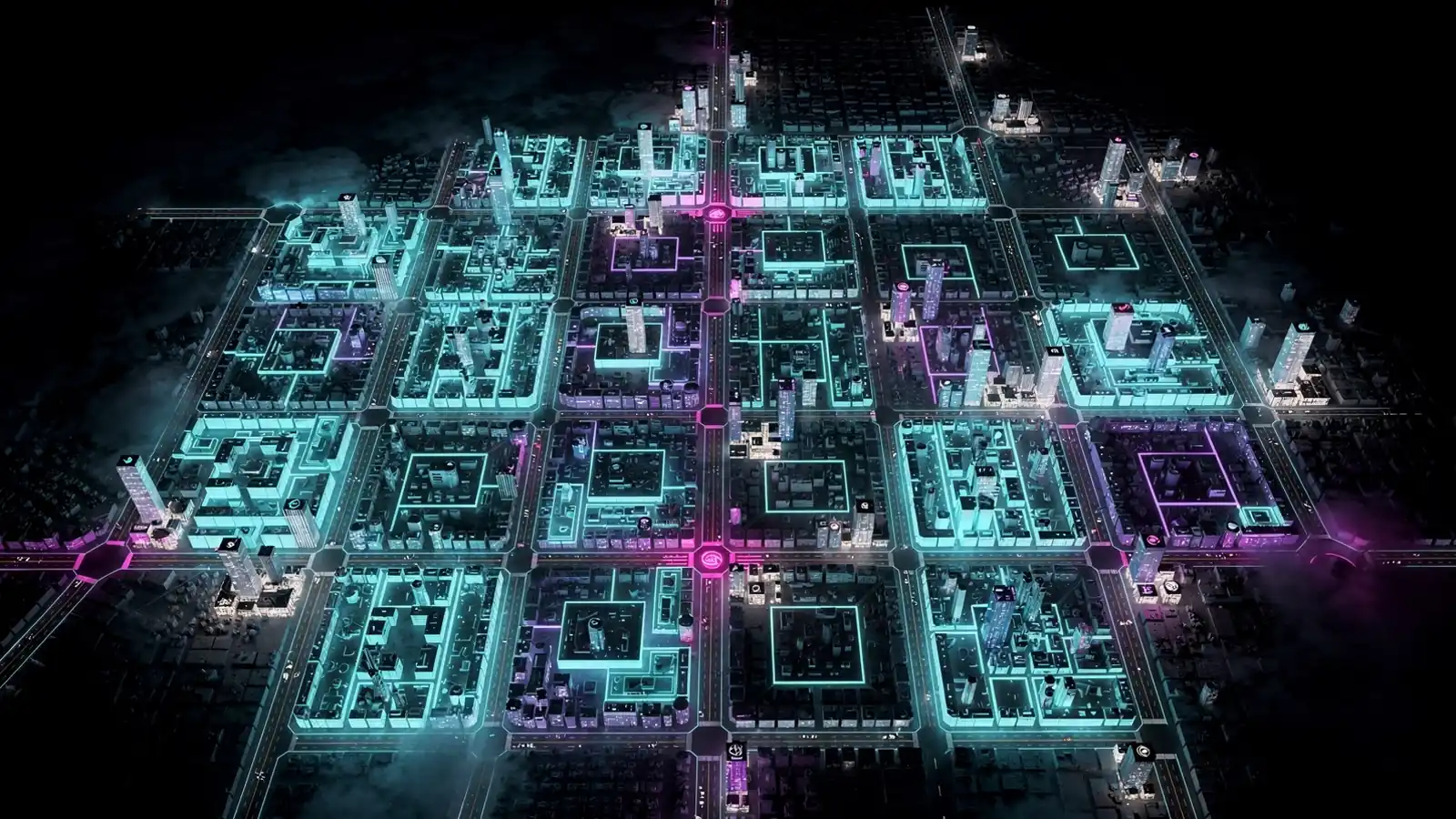
Parcels also combine. Adjacent LANDs form an ESTATE, which is how studios and brands assemble a district or a themed park. Neighbors matter here in a way they rarely do online: what gets built next door affects who walks past your door.
The voxel world model
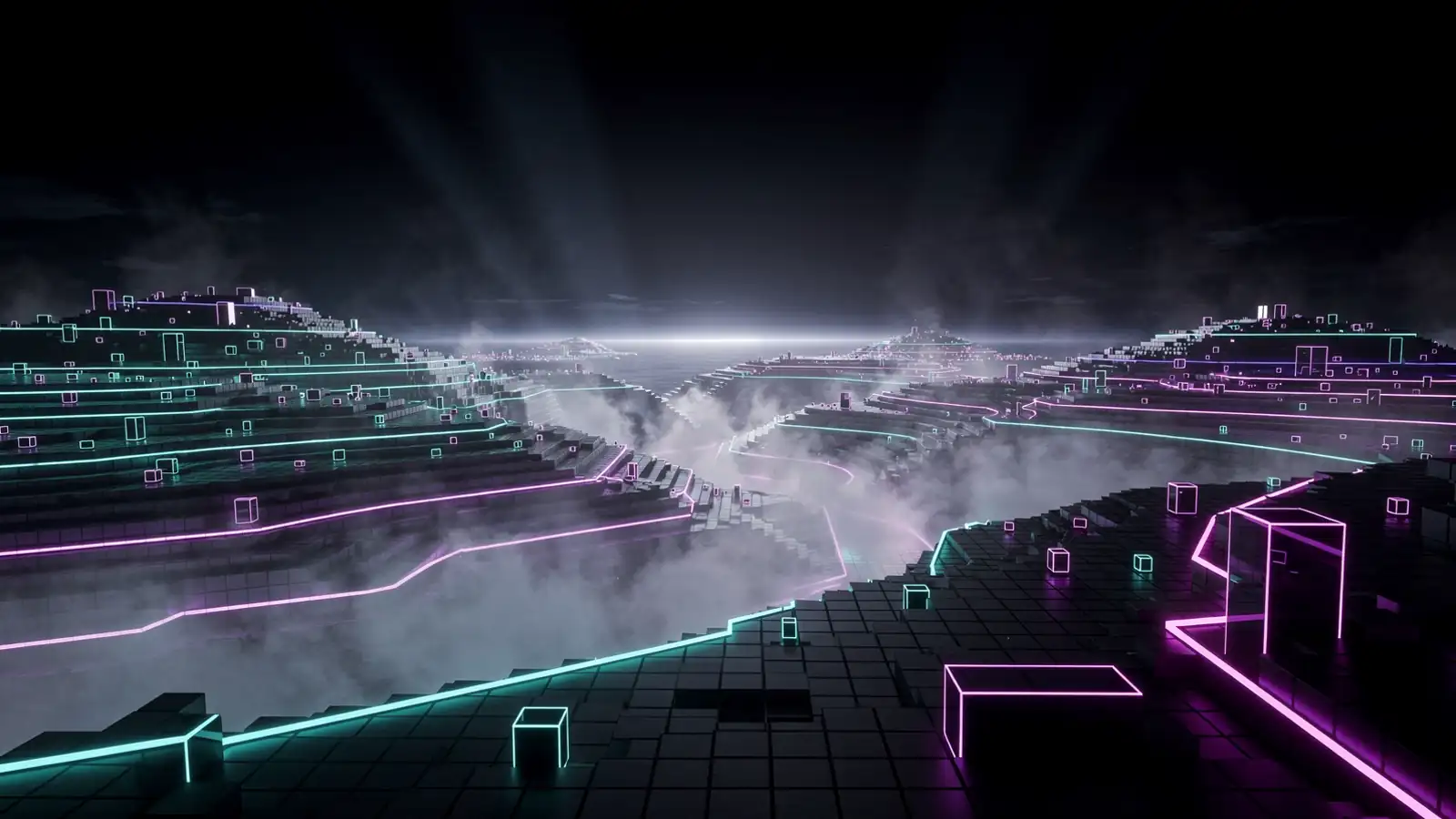
The Sandbox renders everything in voxels — three-dimensional pixels, the same visual grammar that made blocky building games a global habit. That choice is strategic, not nostalgic.
- Cheap to make. No photoreal modeling skills required to produce something that looks native to the world.
- Cheap to run. Scenes stay light enough for ordinary laptops rather than demanding a gaming rig.
- Consistent. A car built by one creator sits comfortably beside a castle built by another.
Consistency is underrated. A shared art language stops an open platform from looking like a junk drawer.
From parcels to a platform
A grid of owned plots becomes a platform only when owners can put experiences on them. That is the real point of a LAND: not a certificate, a hosting slot. Owners publish playable experiences, run events, rent to a creator, or hold as part of a neighborhood they are shaping. The SAND token serves as the ecosystem's utility currency, and much day-to-day activity settles on Polygon to keep costs reasonable.
The Sandbox sits within the wider Animoca Brands ecosystem, and the direction visible on @TheSandboxGame is consistently about widening the funnel: more creators, more entry points, more reasons for someone with no crypto background to walk in and play.
Where Nexaria fits
Land is only half a business. The other half is everything a landowner sells, rents, or gives away to visitors — and that is the part Nexaria Digital is built for.
- Walkable 3D showrooms preview wearables, props, and structures in a browser before a visitor ever loads your parcel.
- Scheduled drops with countdown pages on our drops calendar turn a build reveal into an event.
- Multi-currency pricing means a player in Seoul and one in São Paulo both see a number that makes sense.
- Verified-purchase reviews give a first-time buyer a reason to trust a creator they have never met.
Still working out what owning a coordinate really buys you? Start with our primer on digital real estate, then browse the marketplace.
The takeaway
The Sandbox's insight was that a world need not be authored by one studio. It needs to be plotted — divided into pieces small enough that thousands of people can each take responsibility for one. The games, the crowds, and the culture grow out of that grid.
This post is educational, not financial advice — always do your own research. Project details come from public pages linked above and may evolve; corrections are welcome at our contact page.