The State of VR in 2026: Lighter Headsets, a Bigger Market, and the Immersive Web Ahead
Virtual reality in 2026 is quietly maturing: headsets are getting dramatically lighter, the global VR gaming market is on track to grow toward roughly $19.6 billion by 2035, and a widening field of chipmakers and studios is building the immersive web that digital-asset marketplaces like Nexaria Digital are designed to serve. Here is a plain-English roundup of where VR stands right now — the hardware, the money, and the makers — and why it matters if you care about owning a piece of the virtual world.
Meta's roadmap: two headsets, both lighter, neither in 2026
The biggest signal this year came from Meta. CTO Andrew Bosworth pushed back on "Quest 4 is cancelled" rumors, confirming "two devices on the roadmap": an ultralight, tethered mixed-reality headset targeting the first half of 2027, and a traditional Quest successor — codenamed Griffin — in late 2027 or beyond. Around Meta Connect 2026 on September 23, expect previews rather than products, with smart glasses headlining the show.
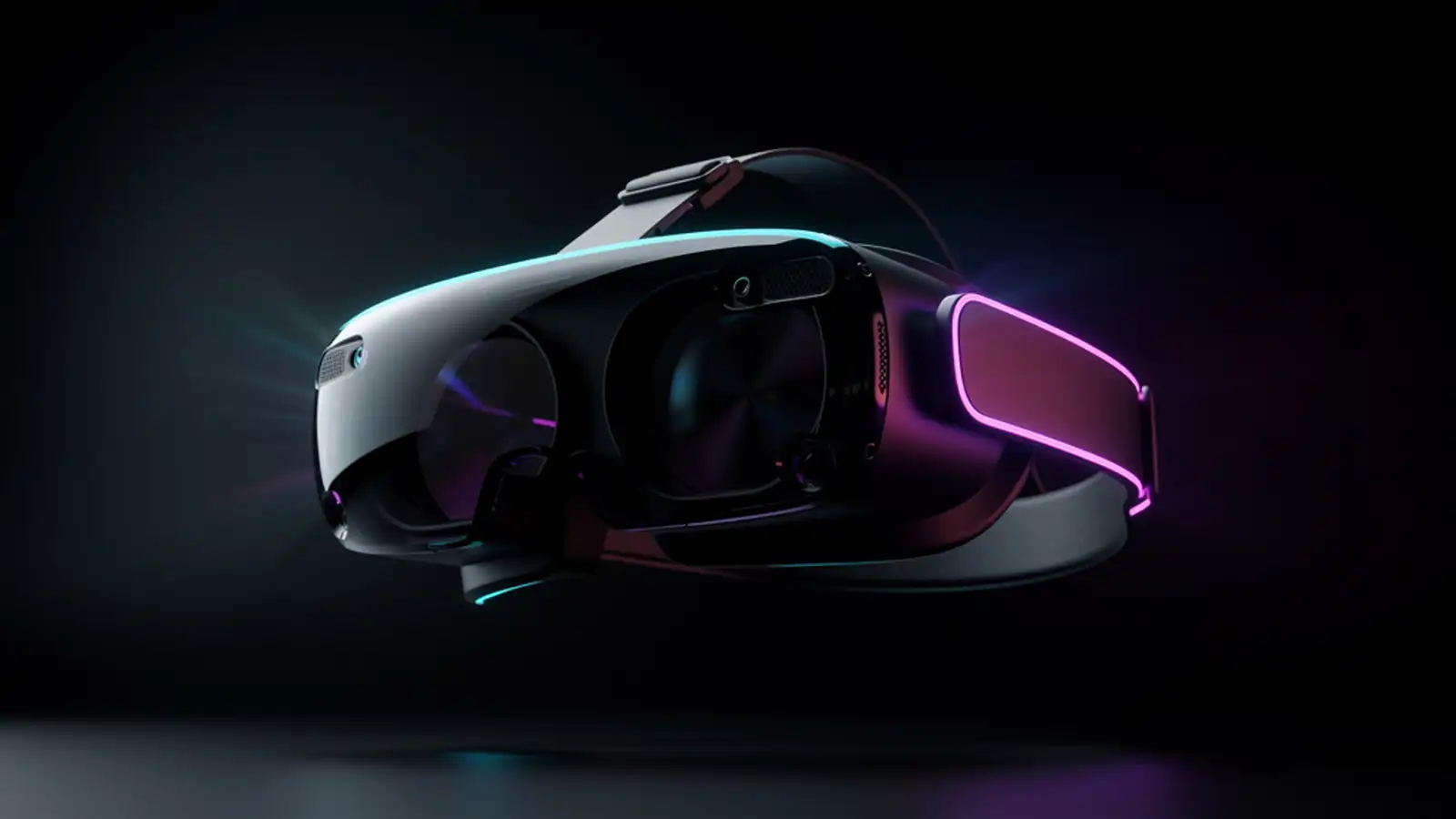
The rumored Quest 4 is chasing a smart-glasses form factor: a sub-300-gram body (versus the Quest 3's 515g), a return to crisp OLED microdisplays, and features like eye tracking and motorized IPD adjustment. The catch: prices are heading up, not down — Meta raised Quest prices in April 2026, and the Quest 4 is expected to be less subsidized than its predecessors. Tellingly, Bosworth admitted Meta keeps learning from rivals, singling out Valve's Steam Frame and its wireless-dongle approach to PC gaming as something Meta failed to match across four headset generations.
The chip that makes featherweight headsets possible
Why can headsets suddenly get so light? A big part of the answer is silicon. Chinese startup GravityXR unveiled the G-X100 coprocessor, a 5-nanometer chip that sips just 3 watts while delivering 200 TOPS of AI performance and driving dual 4K displays at 120Hz, with a claimed 9-millisecond photon-to-photon latency. By offloading the heavy computer-vision work — passthrough, tracking, image reprojection — the chip lets manufacturers move the main processor onto a tethered "puck," ditch the fans and heatsinks, and ship a headset that weighs under 100 grams. Backed by Goertek, ByteDance (which owns Pico), Sequoia China and Lenovo Capital, GravityXR shows how fast the supply chain is racing toward glasses-like comfort — the same sub-110-gram target Meta is chasing with its ultralight "Puffin" concept.
How big is VR, really?
Hype aside, the numbers are steady and real. The global VR gaming market was worth about $11.84 billion in 2024, is projected at $12.4 billion in 2025, and is forecast to reach $19.63 billion by 2035 — a 4.7% compound annual growth rate. Behind those figures: more than 500 new VR games launched in the past year and over 50 million active VR users. North America leads with 45% of the market, followed by Europe (30%) and a fast-growing Asia-Pacific (20%). Headsets dominate hardware revenue, but VR gloves are the fastest-growing category — a hint that richer, more tactile immersion is on the way.
Who is actually building the immersive web
VR is not just Meta and Sony. A broad field of companies is shaping the space: Unity (the engine behind much VR/AR content), Niantic (Pokémon GO and the Lightship platform), Snap (AR Lenses via Lens Studio), Magic Leap (enterprise AR), Matterport (3D spatial capture), and experiential players like Sandbox VR. Just as important are the independent studios. In Victoria, British Columbia, HoloLabs launched Abyss: Vault — a VR game funded through the Canada Media Fund and Creative BC program (up to $200,000 per studio) that cleverly uses moving platforms to make a 6-by-6-metre room feel vast. It is a small story with a big signal: immersive creativity is now a regional economic engine, not a Silicon Valley monopoly.
Why this matters for owning the virtual world
Every trend above points the same direction: VR is getting lighter, cheaper to build, more widely played, and made by more people. That is exactly the world a digital-asset marketplace is built for. As immersive spaces multiply, the things inside them — virtual land, wearables, art, billboards and experiences — become assets people want to own, rent and monetize. That is the thesis behind Nexaria Digital: we break down the difference between VR and AR digital assets, how to build VR and AR event spaces, and where the future of virtual business is heading — the same immersive future already taking shape in worlds like xSPECTAR on the XRP Ledger.
The headsets of 2027 will be lighter than anything we have worn. The question worth asking now is simple: when everyone is inside these worlds, who owns what is in them? Browse the Nexaria marketplace to start answering that for yourself.
This post summarizes third-party reporting linked above and is educational, not investment advice — always do your own research. Product specs and dates are rumored and subject to change; corrections are welcome at our contact page.